 Fewer wet days
Guides
Language
EnglishCurrency
US dollar · $Your currency applies on GetYourGuide too.
Guide · Best time
The best time of day for Denali flightseeing, month by month
Is there a best time of day for Denali flightseeing? The honest answer is the hour when the clouds lift. Here is what the season, the daylight and Talkeetna's climate tell you, and how to give yourself the best odds.
Check availabilityfrom $586 · free to cancel
Editorial team, denaliflightseeing.comUpdated October 25, 2026read in 6 minutes17 sources
Quick answer
Is there a best hour to fly?
People often look for the best time of day for Denali flightseeing, hoping for a rule like early morning or late evening. No official source gives one: the best time is whenever the range is clear, and that can change by the hour. NPS rangers tell visitors to expect sun, wind, rain and clouds, all on the same day.5
What you can control is flexibility. A flight booked early in your stay leaves room to move it if the first slot is cloudy. Money back is guaranteed on the booked flight for any cancellation made 24 hours or earlier before take-off, which makes it easier to hold a seat and adjust as the forecast firms up.
Long summer days also widen your choice of hours. In June the sun is above the horizon for 19.8 hours at mid-month in Talkeetna, so a flight in the late evening still flies in daylight.2 If the morning is grey, ask the office about later departures; the light over the glaciers can be beautiful well after dinner.
The flying year
Seasons around the mountain
-
February
Winter road
Plowing begins; the road opens to mile 13 by mid-month.6
-
Late April
Spring
Visitors can usually drive up to 30 miles in.7
-
May 20
Summer begins
The main visiting season starts.1
-
Late June
Solstice
Over 20 hours of daylight.3
-
Mid-September
Summer ends
-
September or October
Winter returns
Winter lasts through April.8
The best months for a flight
The main visiting season in the park is summer, from May 20 to mid-September.1 Glacier landings follow the snow and are offered mainly in spring and summer.4 Within that window, the weather record helps you choose.
Talkeetna's NOAA normals show early summer as the drier half. May and June each log 5 wet days by NOAA's 2.5 mm yardstick, July 8, and August and September 10 each.2 Precipitation climbs from 44 mm in June to 119 mm in August.2
So if you can choose, late May and June give you the longest days and fewer wet days, with the landing season in full swing. July is warmer, and August and September bring more rain but also autumn color on the tundra below the range. None of these is a guarantee; they are odds, and odds are what you can work with.
Month by month
Darkness and wet days in Talkeetna
Hours without sunDays with precipitationSeason
Climate table
Talkeetna by month
| Month | Daylight (h) | Darkness (h) | High / low | Wet days | Park summer season |
|---|---|---|---|---|---|
| Jan | 6 | 18 | -6 / -15 °C | 4 | |
| Feb | 8.8 | 15.2 | -2 / -12 °C | 4 | |
| Mar | 11.6 | 12.4 | 2 / -11 °C | 3 | |
| Apr | 14.7 | 9.3 | 8 / -3 °C | 3 | |
| May | 17.7 | 6.3 | 15 / 3 °C | 5 | from May 20 |
| Jun | 19.8 | 4.2 | 20 / 8 °C | 5 | summer |
| Jul | 19 | 5 | 21 / 11 °C | 8 | summer |
| Aug | 16.2 | 7.8 | 18 / 9 °C | 10 | summer |
| Sep | 13.1 | 10.9 | 13 / 4 °C | 10 | to mid-Sep |
| Oct | 10.1 | 13.9 | 5 / -3 °C | 7 | |
| Nov | 7.1 | 16.9 | -2 / -10 °C | 5 | |
| Dec | 5.1 | 18.9 | -5 / -13 °C | 5 |
NOAA's Talkeetna airport readings, 1991 to 2020, supply the highs, the lows and each month's tally of days at 2.5 mm or above; the mid-month daylight figure is our own sum for the town.2 Season according to National Park Service.1
Seasons compared
Three windows for a flight
Fewer wet days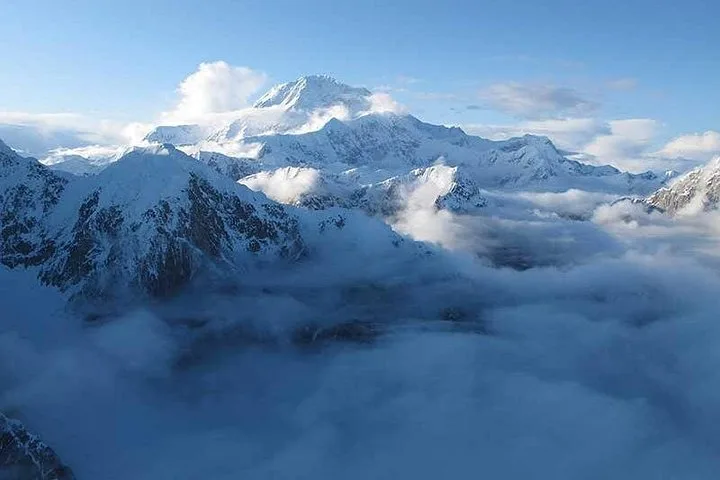 Warmest
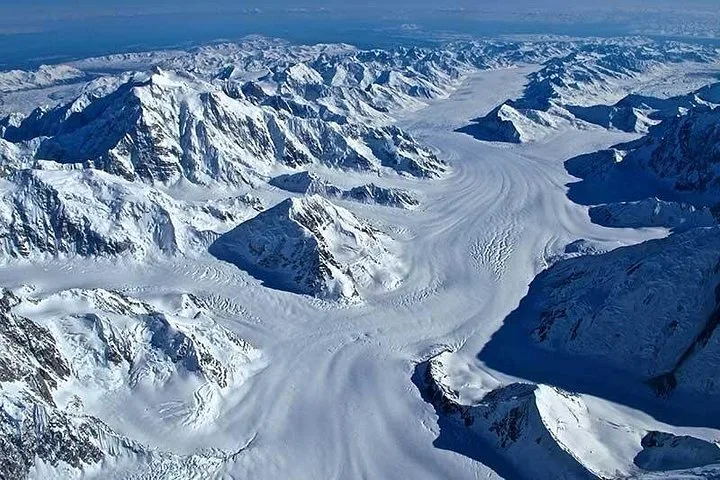 Autumn color
Decision helper
When should you fly?
Match the month and hour to what matters to you
While clear skies are common in deep winter, with intense cold locking up moisture, summer skies are often cloudy.
Clouds, and why summer is tricky
The biggest variable is not rain but cloud. NPS notes that clear skies are common in deep winter, when intense cold locks up moisture, but summer skies are often cloudy.9 Mountains form their own weather, with showers in some valleys while others stay dry or sunny.10
From the park road, veteran bus drivers say only one in three days offers glimpses of the mountain.11 A flight improves those odds, because pilots can climb above low cloud and look for gaps, but it cannot make the summit appear on a day when the upper mountain is buried.
That is why patience pays. Keep at least a spare day in the area, check with the office the evening before and again in the morning, and be ready to move your slot. A short delay on a promising day often beats a punctual flight into grey. It helps to know what pilots look for: a ceiling high enough to clear the foothills, gaps toward the big peaks and calm air over the passes. When the office suggests waiting an hour, that is usually what they are watching, and it is worth trusting their judgement.
Checklist
Timing your flight
01
When booking
- Choose free cancellation
- Fly early in your stay
- Ask about late summer slots
02
On the day
- Check the sky and call the office
- Bring a warm layer
- Keep the next day free
Video
A flight over Denali National Park
No video data loads before you press play.
Daylight through the year
Alaska's light swings hugely with the seasons. NPS says the late-June solstice brings over 20 hours of daylight, while on the winter solstice the sun is above the horizon for less than four and a half hours.3
In Talkeetna the mid-month figures run from 19.8 hours of sun above the horizon in June to 5.1 hours in December.2 In September the figure is already down to 13.1 hours, still plenty for a flight but with more of the day in shadow among the peaks.2
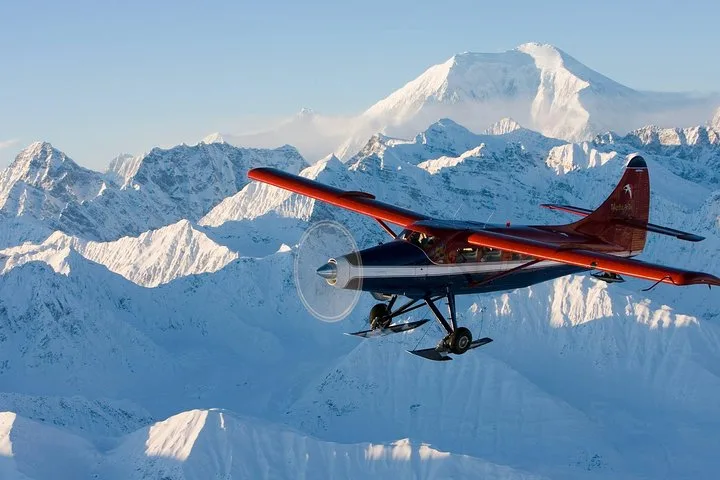
For photographers the low summer sun is a gift. In the evening the light comes in at a shallow angle, picking out the ridges and the textures on the glaciers. If you care about pictures more than anything else, ask whether a late flight is offered on your dates. Midday light is harsher and flatter on the snow, but it also shows the blue of crevasses and the shapes of the icefalls clearly, so there is something to gain at every hour.
Does Denali have snow year round?
Yes, the high mountain stays white all year. NPS gives the snow line in the Denali landscape at around 6,000 feet above sea level, far below the summit at 20,310 feet.1213 Glaciers cover one million acres, one-sixth of the park.14
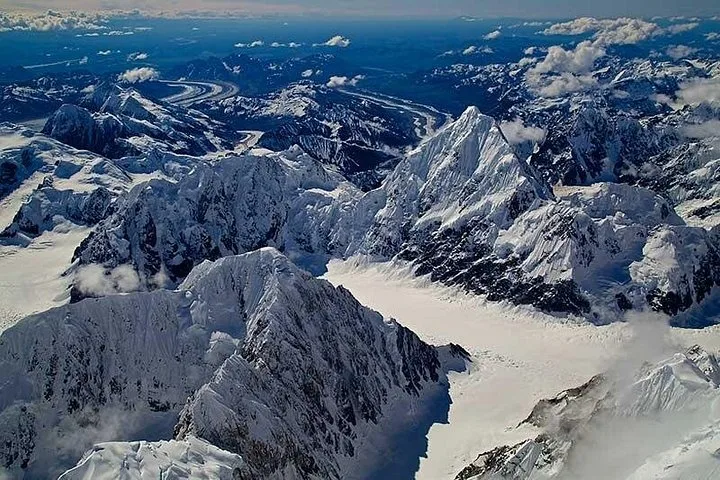
Hundreds of unnamed glaciers and at least 40 named ones flow from as high as 19,000 feet down to as low as 800 feet.15 So even in the warmest month, a flight passes over snowfields, icefalls and glaciers, and that white world is what you are paying to see.
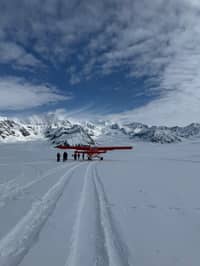
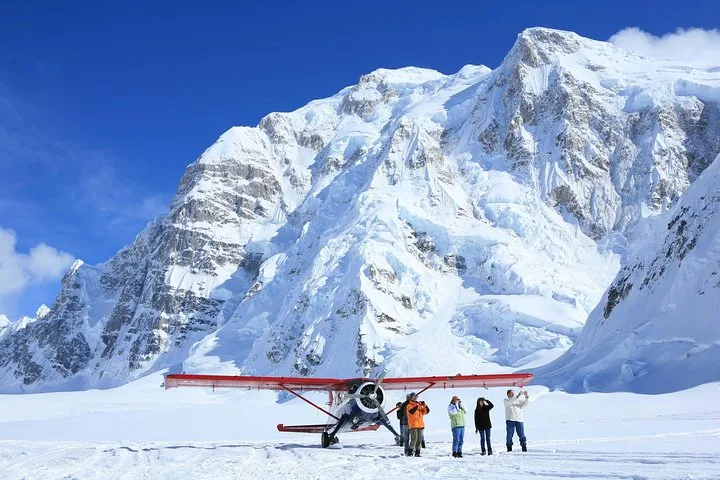
The snow is also what makes landings possible. Ski-equipped planes need the right surface, and NPS explains that glacier landings are offered mainly in spring and summer because snow conditions vary.164 Late in the season, ask whether landings are still running before you book the option.
Can you visit Denali in winter?
You can visit Denali in winter, though it is a very different trip. NPS describes winter in the park as September or October through April.8 Once significant snow falls, the road closes at Park Headquarters at mile 3; plowing begins in February and the road typically opens to Mountain Vista, mile 13, by mid-February.6
The cold is serious: temperatures can drop to -40°F (-40°C).17 At the same time, winter has an advantage for viewing: NPS says clear skies are common in deep winter.9 Some flightseeing operators fly all year, though glacier landings belong mainly to spring and summer.164
Spring is a quieter in-between. In a typical year the park road is plowed and visitors can drive up to 30 miles in by late April.7 Before booking any off-season flight, check with the operator what runs on your dates, how warm the cabin is and whether the light suits the route.
Putting it together
If you want the classic summer flight with the best odds, aim for late May or June, book early in your stay and keep the following days free. Choose a listing with free cancellation and stay in Talkeetna so you can react to the morning sky. If you are driving, a night in town before and after the flight costs little and gives you more chances.
If your dates are fixed, do not worry too much about the month. Every summer month has clear days and cloudy ones, and the glaciers are impressive in all of them. Talkeetna's average high in July is 20.5 °C, so the town itself is pleasant while you wait.2
And if the mountain stays hidden, remember what is still there: the great glaciers, the gorges and the scale of the range. One guest who reviewed the booked flight could not land because of the weather and still wrote about the beautiful views; the range rewards you even on an imperfect day.
Book your seat
The Alaska Range is a short flight from Talkeetna.
Reserve the long loop, add a landing if you like, and cancel free up to a day ahead.


You ask,we answer.
What is the best time of day to fly over Denali?
Whenever the clouds lift. No official source names a best hour; book early in your stay and keep flexible.
Which month has the fewest wet days in Talkeetna?
March and April, with 3. In summer, May and June count 5 each.2
When is the main season?
May 20 to mid-September. That is the park's summer season as NPS gives it.1
How long are the days in June?
Very long. The late-June solstice brings over 20 hours of daylight.3
Does Denali have snow in summer?
Yes, high up. NPS gives the snow line at around 6,000 feet.12
Are there flights in winter?
Some operators fly all year. Glacier landings are mainly offered in spring and summer.164
What if my flight day is cloudy?
Move your slot if you can. Cancellations made 24 hours or earlier before take-off are refunded on the booked flight.
Sources
What this guide is based on
- 1National Park ServiceOperating Hours & Seasons - Denali National Park & Preserve↩
- 2↩
- 3National Park ServiceOperating Hours & Seasons - Denali National Park & Preserve↩
- 4National Park ServiceFlightseeing - Denali National Park & Preserve↩
- 5National Park ServiceWeather - Denali National Park & Preserve↩
- 6National Park ServiceOperating Hours & Seasons - Denali National Park & Preserve↩
- 7National Park ServiceOperating Hours & Seasons - Denali National Park & Preserve↩
- 8National Park ServiceOperating Hours & Seasons - Denali National Park & Preserve↩
- 9National Park ServiceWhere to See and Photograph Mount McKinley and Wildlife↩
- 10National Park ServiceWeather - Denali National Park & Preserve↩
- 11National Park ServiceWhere to See and Photograph Mount McKinley and Wildlife↩
- 12National Park ServiceWhere to See and Photograph Mount McKinley and Wildlife↩
- 13National Park ServicePark Statistics - Denali National Park & Preserve↩
- 14National Park ServiceGlaciers / Glacial Features - Denali National Park & Preserve↩
- 15National Park ServiceGlaciers / Glacial Features - Denali National Park & Preserve↩
- 16National Park ServiceFlightseeing - Denali National Park & Preserve↩
- 17National Park ServiceOperating Hours & Seasons - Denali National Park & Preserve↩
Keep reading